


Testosterone is not an established general treatment for insulin resistance or diabetes. TRAVERSE did not show diabetes prevention or better glucose control in men with hypogonadism. T4DM found fewer diabetic-range glucose-tolerance results when testosterone was added to a lifestyle program in a different population, but hematocrit safety triggers were common. Diabetes and a possible hormone deficiency need separate clinical assessment.125
Key points
- TRAVERSE did not demonstrate a diabetes-prevention benefit.1
- T4DM studied a lifestyle-program population without pathological hypogonadism.2
- A favorable glucose endpoint must be considered with hematocrit risks.2
Are insulin resistance and low testosterone connected?
Low testosterone, obesity, insulin resistance, and type 2 diabetes often coexist. That association does not establish that testosterone deficiency is the sole cause of the metabolic problem, or that replacing testosterone will prevent diabetes. The largest randomized studies have produced different results in importantly different populations. 12
Insulin resistance means tissues respond less effectively to insulin. Prediabetes and diabetes are defined using glucose-related measurements, not testosterone. A person can have a low hormone result without diabetes or diabetes with a normal hormone result. NIDDK explains why fasting glucose, A1C, and sometimes an oral glucose-tolerance test are used to assess metabolic status. 3
The useful clinical question is whether there are two conditions to evaluate and manage, rather than whether one laboratory number can explain both.
Did testosterone prevent diabetes in men with hypogonadism?
The TRAVERSE diabetes substudy did not find a significant reduction in progression from prediabetes to diabetes with testosterone compared with placebo. It also did not show improvement in glycemic remission or glucose control among the studied men with diabetes. Participants had symptoms, two low fasting testosterone results, and cardiovascular disease or elevated cardiovascular risk. 1
This is direct evidence against presenting testosterone replacement as an established diabetes-prevention or glucose-lowering intervention for that population. It does not imply that treating genuine hypogonadism has no other potential benefits.
The endpoint matters here. A study can show changes in body composition or sexual symptoms while failing to improve diabetes outcomes. Those changes are not interchangeable. Our fat-loss article explains why a favorable fat-mass result cannot substitute for measured glucose outcomes.
Why did T4DM report fewer diabetic-range glucose results?
T4DM studied a different question: adding injectable testosterone to a structured lifestyle program in men aged 50-74 with central obesity, testosterone at or below 14 nmol/L, and impaired glucose tolerance or recently diagnosed diabetes, without pathological hypogonadism. It randomized 1,007 men for two years. 2
Among participants with available two-year oral glucose-tolerance results, diabetic-range two-hour glucose occurred in 55 of 443 testosterone participants, about 12%, and 87 of 413 placebo participants, about 21%. The relative risk was 0.59. 2
This result should retain its context. The study tested testosterone plus a lifestyle program in a selected metabolic population. It did not establish testosterone as a replacement for standard diabetes treatment or prove the same effect in TRAVERSE-type hypogonadism. Reporting only the favorable percentage without eligibility, background treatment, or adverse effects would change the meaning of the trial.

How can T4DM and TRAVERSE both be valid?
Different studies can legitimately give different answers when the populations, interventions, and endpoints differ. T4DM used injectable testosterone on a lifestyle-program background and emphasized the two-hour oral glucose-tolerance result. TRAVERSE used gel in men with confirmed hypogonadism and cardiovascular risk, with progression criteria incorporating glucose, A1C, or diabetes treatment. 12
The comparison does not establish which difference caused the different findings. That would require an appropriate direct study. It does show why one positive result cannot simply be substituted for the other trial's negative result.
| Feature | T4DM | TRAVERSE diabetes substudy |
|---|---|---|
| Population | Central obesity and glucose intolerance or new diabetes, without pathological hypogonadism. 2 | Confirmed hypogonadism with cardiovascular disease or risk. 1 |
| Treatment setting | Injectable testosterone plus a lifestyle program. 2 | Testosterone gel or placebo in the parent safety trial. 1 |
| Main metabolic emphasis | Diabetic-range two-hour OGTT result at two years. 2 | Progression to diabetes using prespecified clinical and laboratory criteria. 1 |
| Result | Fewer diabetic-range OGTT results; substantial hematocrit triggers. 2 | No significant prevention of progression or glycemic benefit. 1 |
What safety tradeoff appeared in T4DM?
Hematocrit safety triggers were much more common with testosterone in T4DM. A hematocrit above 54% occurred in 22% of evaluable testosterone participants versus 1% of placebo participants. This is a monitoring signal with practical consequences, even alongside the favorable glucose-tolerance endpoint. 2
The trial was not a demonstration that a metabolic benefit can be pursued without treatment burden. A reader weighing the result needs both sides of the comparison, including the number of participants who required action on safety measurements.
Our article on hematocrit monitoring explains the blood-count issue. A strong biological response is not automatically a net benefit, especially when the treatment is being considered for a purpose outside the best-established rationale for hormone replacement.
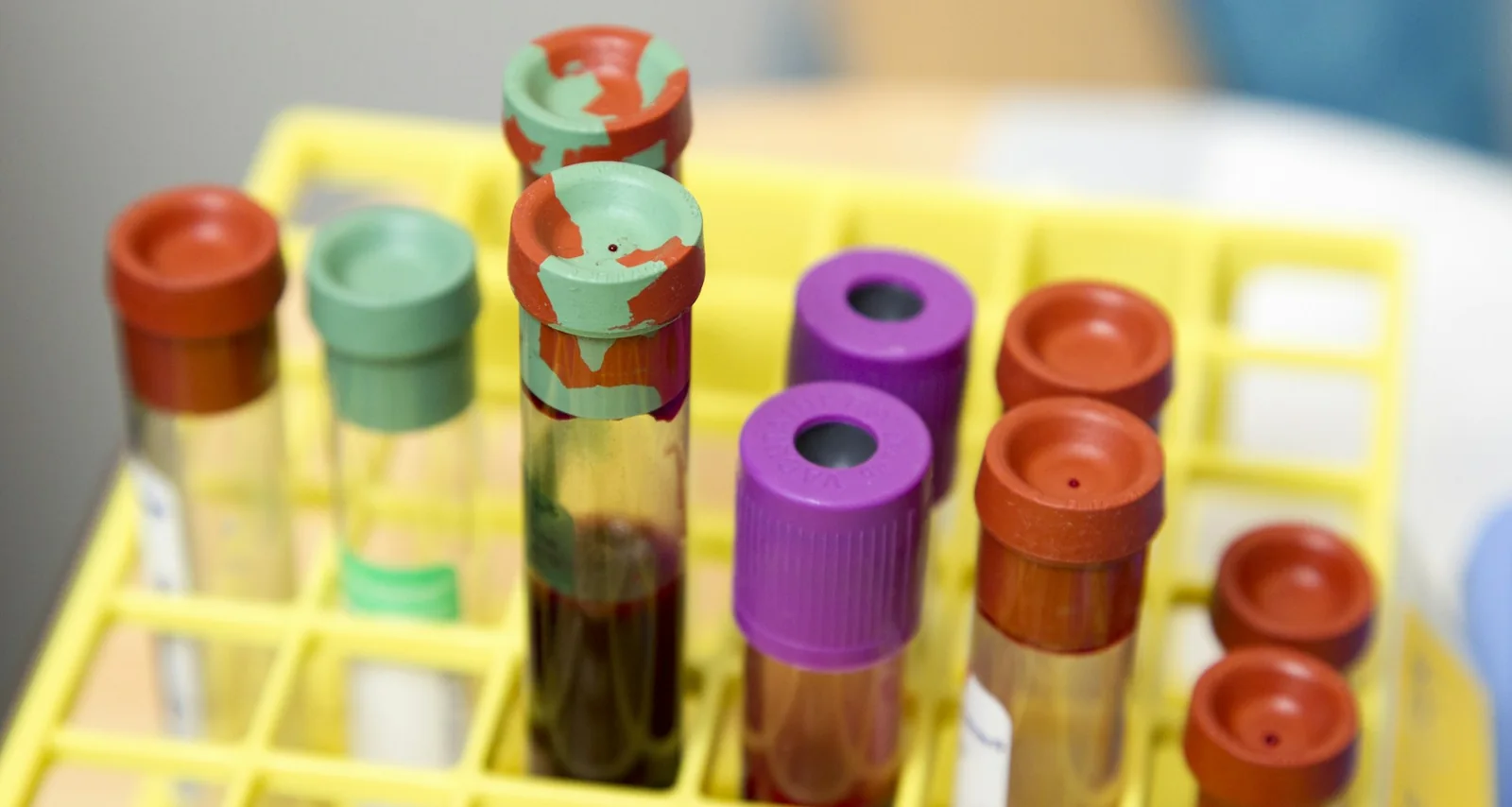
Can A1C alone settle whether testosterone improved diabetes?
A1C is useful because it reflects average glucose exposure over roughly three months, but it is not interchangeable with fasting glucose or an oral glucose-tolerance result. These tests can identify overlapping but different groups of people. A result that conflicts with other measurements needs clinical interpretation and sometimes confirmation. 34
Blood conditions can also affect A1C interpretation. NIDDK notes that some forms of anemia and other red-cell issues can make the result less reliable. This does not mean every A1C change on testosterone is an artifact. It means the clinician should consider the blood-count context rather than assuming a single measurement captures the entire metabolic response. 4
The red-cell article describes why testosterone can change hemoglobin and hematocrit. When several systems change together, comparing the actual glucose measurements with A1C may be more informative than celebrating one isolated result.
Should testosterone be prescribed specifically to lower glucose?
The Endocrine Society guideline recommends against testosterone therapy as a means of improving glycemic control in men with type 2 diabetes and low testosterone. That 2018 recommendation predates both major studies, and the later TRAVERSE diabetes result is consistent with its caution. 51
A man with diabetes can still have a separate indication for evaluation and treatment of hypogonadism. The decision should state that indication clearly. Correcting a hormone deficiency for relevant symptoms is different from treating testosterone as a diabetes medicine.
Diabetes care should continue according to its own clinical targets and treatment plan. An improved hormone concentration does not justify stopping glucose-lowering medication or routine complication monitoring. Any changes should follow measured metabolic response and the prescribing clinician's assessment, rather than an expectation based on body composition or a general energy improvement.
What should someone with both conditions ask at follow-up?
Clarify which outcome each treatment is intended to improve. For hormone care, that may include a specific symptom and an appropriate testosterone range with safety monitoring. For metabolic care, it includes glucose measures, weight-related goals where relevant, and the broader risk profile.
Then compare like with like over time. A fasting glucose after an acute illness, an A1C measured in a changing anemia state, and a two-hour tolerance test are not identical snapshots. Record medication changes and the background lifestyle program so that improvement is not automatically attributed to one intervention.
The trial context is part of the result. Population, formulation, lifestyle support, outcome definition, and safety triggers all belong beside the headline. Once those details are kept visible, T4DM and TRAVERSE become a useful comparison rather than a contest in which one study must be ignored.
Common questions
Does low testosterone mean I have insulin resistance?
No. The conditions can coexist, but metabolic status is assessed through the clinical context and appropriate glucose-related tests. Testosterone is not a diabetes diagnostic test.3
Can I stop diabetes medication when TRT starts?
References
- 1.Bhasin et al. Effect of Testosterone on Progression From Prediabetes to Diabetes in Men With Hypogonadism. JAMA Internal Medicine. 2024.
- 2.Wittert et al. Testosterone treatment to prevent or revert type 2 diabetes in men enrolled in a lifestyle programme (T4DM). Lancet Diabetes & Endocrinology. 2021.
- 3.NIDDK. Recommended Tests for Identifying Prediabetes.
- 4.NIDDK. Diabetes Tests & Diagnosis.
- 5.Bhasin et al. Testosterone Therapy in Men With Hypogonadism: An Endocrine Society Clinical Practice Guideline. JCEM. 2018.
This article is for general education, not medical advice, diagnosis or a treatment recommendation. A licensed clinician can interpret the evidence in the context of your symptoms, tests, medicines and fertility plans.