


Low testosterone is diagnosed when compatible symptoms or signs occur with consistently low testosterone measured accurately on separate morning samples. Clinicians review collection conditions, add free testosterone when total results or SHBG warrant it, and use LH, FSH, and selected further tests to investigate the cause. A diagnosis does not automatically make every testosterone treatment appropriate.12
Key points
- One low laboratory result is not a complete diagnosis.12
- Borderline or discordant values require interpretation rather than choosing the lowest result.13
- Confirming deficiency, finding its cause, and choosing treatment are three separate decisions.1
What starts the diagnostic process?
The process starts with a clinical reason to suspect a hormone disorder. Persistent sexual symptoms, relevant examination findings, infertility, unexplained anemia or bone findings, and a history of testicular or pituitary disease may justify evaluation. Nonspecific tiredness or poor concentration can also be discussed, but they have many possible explanations.1
The history should document onset, duration, severity, sleep, recent illness, medicines, previous hormone exposure, and reproductive goals. A physical examination may add information that a symptom questionnaire cannot supply. Symptoms deserve investigation even if the final explanation is not testosterone.
The symptom guide explains which clues are more informative. The objective is to build a testable explanation for the concern, rather than use a checklist to decide in advance that a prescription is needed.
How should the initial testosterone result be obtained?
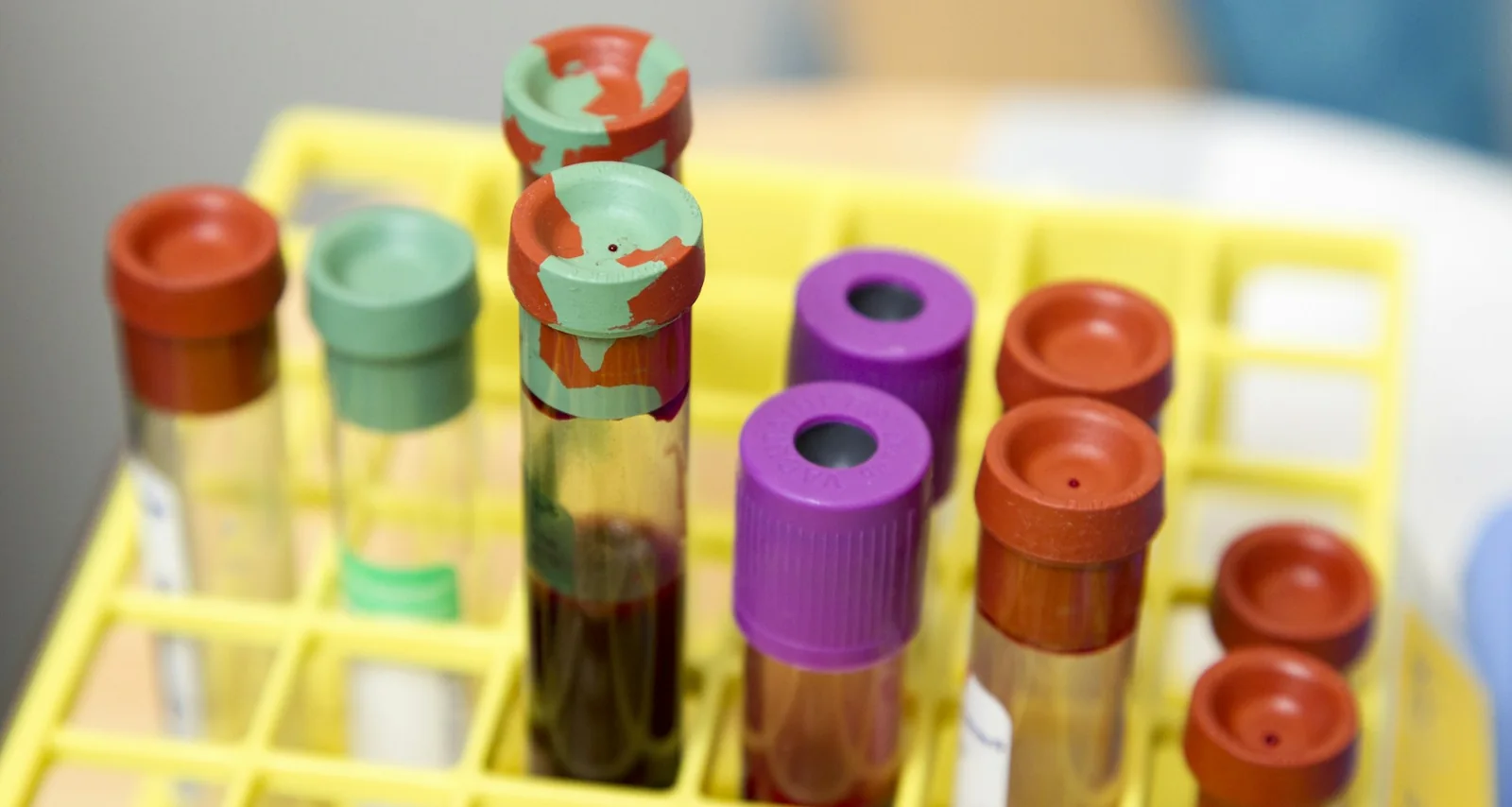
For an untreated adult with suspected deficiency, morning total testosterone is the usual first laboratory test. The Endocrine Society recommends fasting collection with an accurate assay. The clinician should consider whether acute illness, unusual sleep, or other circumstances make that day a poor representation of the person's baseline.1
Collection is not a minor technical detail. Studies of daily variation show that afternoon measurements can classify some men differently from morning results. A glucose-challenge experiment also demonstrated transient testosterone reduction after ingestion. These findings support standardized sampling, rather than attempts to diagnose a permanent condition from an opportunistic low value.4 5
The blood test guide provides the practical preparation details. A report should preserve time, units, laboratory range, and method so a subsequent measurement can be compared meaningfully.
What does the repeat test establish?
A repeat on a separate morning helps establish whether the biochemical finding persists. The AUA recommends two early-morning measurements and uses total testosterone below 300 ng/dL as a reasonable cutoff supporting the diagnosis, alongside symptoms or signs. A cutoff guides assessment; it does not replace it.2
If one result is low and the other is normal, review the conditions and the distance from the decision boundary. Illness, food intake, sleep, medicines, and assay variation may explain disagreement. Selected further testing can be appropriate, but repeatedly measuring until one result supports a desired conclusion is not sound confirmation.
Two results obtained under the same distorting conditions can also be consistently misleading. The clinical question is persistent deficiency under interpretable circumstances, not merely two matching low flags. The symptoms and context must remain part of the evaluation.
When should free testosterone be added?
Free testosterone is particularly useful when total testosterone lies near a diagnostic boundary or SHBG is altered. A reliable measurement or validated calculation can clarify whether a low total value reflects low hormone availability or a change in the bound pool. Method-specific interpretation is essential.1
The Antonio analysis of the European Male Ageing Study found different symptom patterns in men with discordant total and calculated free testosterone. Low free values with normal total values were associated with androgen-related findings. This supports selected free assessment but does not make an isolated calculated result a treatment mandate.3
The total versus free comparison explains the assays and their limitations. A clinician should be able to state why the extra test would change the diagnostic conclusion rather than ordering it simply because it is available.
How is the cause investigated after deficiency is confirmed?
LH and FSH help distinguish testicular dysfunction from insufficient hypothalamic or pituitary stimulation. High LH with low testosterone suggests inadequate testicular response. Low or inappropriately normal LH suggests that the upstream stimulation is insufficient.1
The next tests depend on that pattern and the history. Secondary patterns may warrant prolactin, iron assessment, and selected pituitary evaluation. Primary patterns may prompt more detailed testicular or genetic assessment when indicated. New visual symptoms, new severe headache, or evidence of other pituitary deficits can change the urgency.1 6
This stage matters because testosterone replacement does not treat every underlying cause. A prolactin disorder, medication effect, or structural disease may require another intervention or additional follow-up. Naming the cause also helps explain whether improvement without ongoing replacement is plausible.
What does a complete diagnostic workflow look like?
Each step resolves a different uncertainty; skipping one leaves a different kind of error.1 2 3 4 5 6
| Step | Question answered | What it does not answer |
|---|---|---|
| History and examination | Is there a compatible clinical problem? | Whether a symptom is definitely hormonal |
| Initial appropriate testosterone test | Is there a biochemical concern? | Whether it persists |
| Repeat on a separate morning | Is the low finding reproducible? | What caused it |
| Selected free testosterone/SHBG | Could binding or method explain a mismatch? | Whether treatment will improve symptoms |
| LH, FSH, and targeted evaluation | Where is dysfunction likely, and why? | Whether every therapy fits the person |
| Treatment suitability discussion | Do goals, fertility, risks, and monitoring support an option? | A guarantee of benefit |

What happens if testosterone is normal but symptoms continue?
The symptoms still deserve an explanation. Reassuring hormone results can redirect attention toward sleep disorders, anemia, thyroid disease, depression, medication effects, vascular disease, or other contributors suggested by the history. They should not be treated as evidence that the concern was imaginary.1
If SHBG-related discordance is plausible, appropriate free assessment may still be useful. Otherwise, repeatedly pursuing hormone values without a changing clinical question can delay investigation of more likely causes. The scope should follow the symptom and the evidence.
It is helpful to record which explanation has become less likely and what will be assessed next. A diagnostic process should remain productive even when it does not confirm low testosterone. The aim is improved understanding and care, rather than validation of a particular suspected label.
Should every healthy man be screened for low testosterone?
The Endocrine Society recommends against routine population screening for hypogonadism. Testing is more useful when a clinical concern, relevant condition, or finding gives the result a clear purpose. This differs from saying that only severe symptoms deserve attention or that a younger person cannot have genuine endocrine disease.1
Screening people without a specific clinical question can uncover borderline values that reflect normal variation, collection conditions, or binding proteins. A laboratory flag then creates another decision without establishing a problem that treatment would improve. The potential for uncertainty is especially high when several panels and methods are used repeatedly.
A useful test request states what prompted it and what would happen after either a low or reassuring result. For example, symptoms may justify endocrine assessment while also requiring evaluation of sleep, medication effects, or anemia. A normal testosterone should leave a sensible next step for the symptom rather than leave the patient with no explanation.
This is an evidence-based reason to individualize testing. It keeps attention on disorders that can be identified and managed, while avoiding the assumption that every adult needs a hormone score simply because the measurement is available.
Why is treatment suitability a separate decision?
A confirmed diagnosis establishes that a disorder is present. It does not automatically determine the best intervention, formulation, or timing. The cause, symptom priorities, fertility goals, blood count, relevant comorbidities, and capacity for monitoring affect the benefit-risk discussion.1
Exogenous testosterone can suppress sperm production, and a treatable underlying cause may change the plan. Baseline assessment also provides a way to judge whether symptoms improve and whether adverse effects develop. Correcting the number is only part of follow-up.
The final clinical explanation should be specific: what evidence confirms deficiency, what cause is known or suspected, what treatment is intended to improve, and what will trigger reassessment. That makes the diagnosis understandable and the next decision reviewable without implying that every person with a low result should receive the same therapy.
Common questions
Can a questionnaire diagnose testosterone deficiency?
No. A questionnaire may organize symptoms, but its findings are not specific enough to replace reliable repeat measurements and clinical assessment.1
Does a total testosterone below 300 ng/dL guarantee a prescription?
Does every patient need pituitary imaging?
Can testosterone treatment be used as a diagnostic trial?
Symptom response alone does not reliably establish the original diagnosis. Baseline evaluation should occur first, because treatment changes the hormone feedback system and can make untreated function harder to assess.1
References
- 1.Bhasin S, et al. Testosterone Therapy in Men With Hypogonadism: An Endocrine Society Clinical Practice Guideline. Journal of Clinical Endocrinology & Metabolism. 2018.
- 2.Mulhall JP, et al. Evaluation and Management of Testosterone Deficiency: AUA Guideline. Journal of Urology. 2018; validity confirmed 2024.
- 3.Antonio L, et al. Low Free Testosterone Is Associated with Hypogonadal Signs and Symptoms in Men with Normal Total Testosterone. Journal of Clinical Endocrinology & Metabolism. 2016.
- 4.Brambilla DJ, et al. The Effect of Diurnal Variation on Clinical Measurement of Serum Testosterone and Other Sex Hormone Levels in Men. Journal of Clinical Endocrinology & Metabolism. 2009.
- 5.Caronia LM, et al. Abrupt Decrease in Serum Testosterone Levels After an Oral Glucose Load in Men: Implications for Screening for Hypogonadism. Clinical Endocrinology. 2013.
- 6.Endocrine Society. Hyperprolactinemia. Endocrine Library.
This article is for general education, not medical advice, diagnosis or a treatment recommendation. A licensed clinician can interpret the evidence in the context of your symptoms, tests, medicines and fertility plans.