

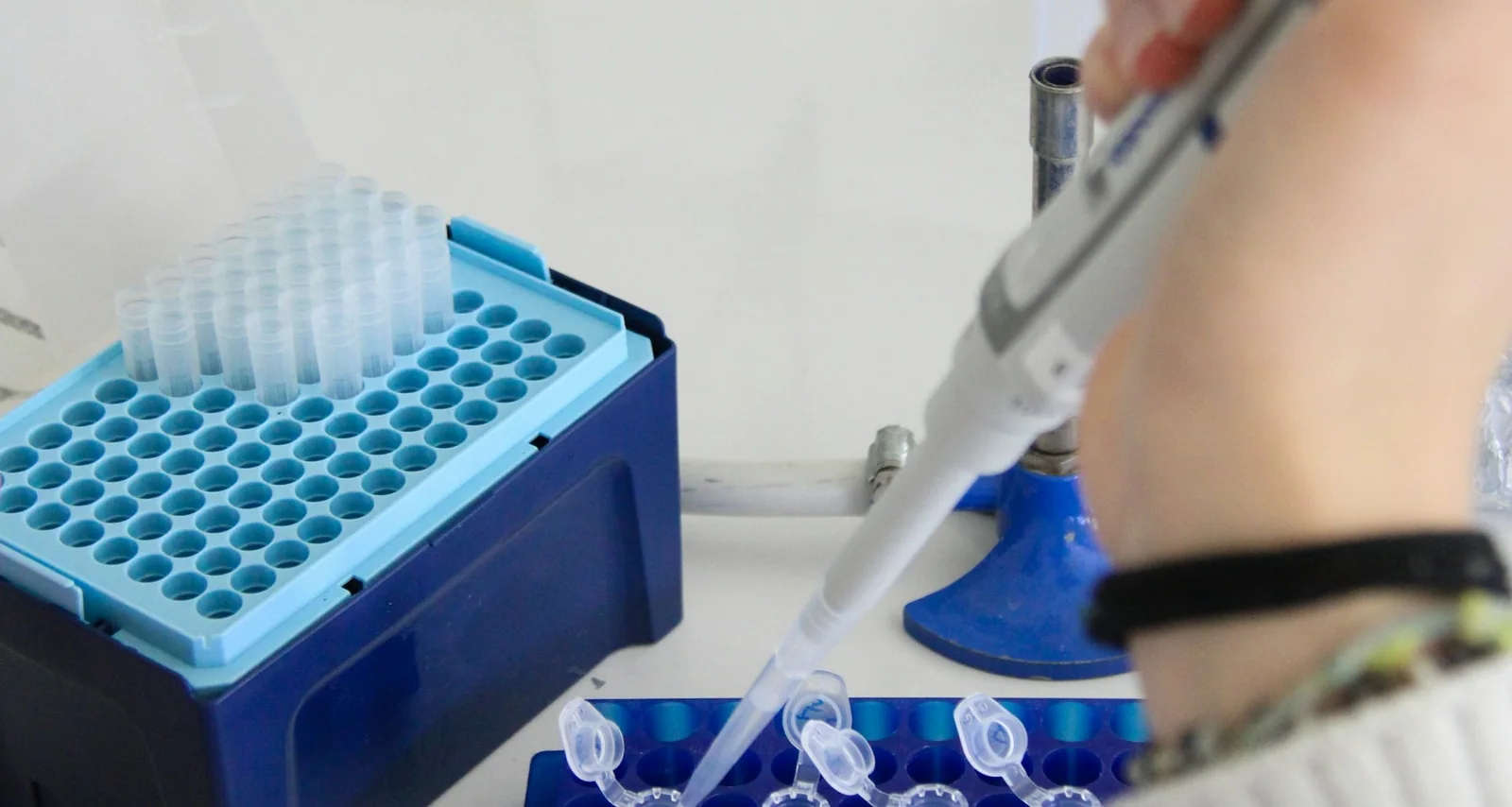
Total testosterone includes hormone bound to SHBG and albumin plus the unbound fraction. Free testosterone measures or estimates only that unbound fraction. Total testosterone is usually the first test; free testosterone becomes useful when total results are borderline or SHBG is altered. Neither result should be interpreted without symptoms, repeat testing, and the laboratory method.12
Key points
- Total and free testosterone measure different parts of the same circulating hormone pool.1
- A normal total result can coexist with low free testosterone when binding proteins differ.23
- Calculated, equilibrium-dialysis, and direct analog results are not interchangeable.245
What are total, free, and bioavailable testosterone?
Total testosterone is the sum of circulating testosterone in its bound and unbound forms. Most is attached to proteins, principally SHBG and albumin. Free testosterone is the small unbound fraction. Bioavailable testosterone usually refers to free testosterone plus the fraction loosely bound to albumin, excluding the more tightly SHBG-bound fraction.1
The labels describe different measurements, not stronger and weaker versions of the hormone. Protein binding is part of normal transport and regulation. Bound testosterone is not simply wasted testosterone that should be released through a supplement or medication.
The physiological question is whether androgen availability is adequate in the clinical context. Total testosterone often answers that question well enough as a first step, while free testosterone may add information when the binding environment makes total concentration misleading. The two results are complementary when ordered for a clear reason.
Why is total testosterone usually tested first?
Total testosterone has a larger clinical evidence base for diagnosis and generally better established assay standardization than free testosterone. Guidelines therefore start with a properly collected total measurement and confirm a low finding. The fact that free hormone is biologically relevant does not make every free testosterone test analytically superior.2
For a result clearly within a reliable reference interval and a low likelihood of abnormal binding, adding several differently named hormone tests may not change the next clinical step. With a borderline total result or an SHBG-related condition, the additional measurement can be more useful.
The reference-range guide explains why a total cutoff differs from an ideal personal level. Whatever is ordered, the report should identify the method, units, and laboratory-specific interval. A precise-looking decimal does not remove uncertainty about collection or interpretation.
How does SHBG create apparently conflicting results?
SHBG changes how circulating testosterone is distributed between bound and unbound forms. Higher SHBG can be associated with a normal or higher total value while free testosterone is relatively low. Lower SHBG can accompany a lower total value without the same reduction in free testosterone. The actual result depends on production, binding, and the broader endocrine system.2 3
This is why clinicians consider obesity, thyroid disease, liver disease, some medications, and other conditions when interpreting discordant values. SHBG is not a diagnosis in itself. A high or low result prompts a question about cause and about whether the total concentration describes androgen status adequately.
The SHBG guide addresses those causes. Trying to manipulate SHBG just to improve a calculated free result can change a marker without demonstrating improvement in symptoms or health.

What can different total and free patterns suggest?
The following table compares patterns, not patient cases. Each row assumes repeat testing and an appropriate free testosterone method. A single result, particularly from a poorly characterized assay, cannot support the same interpretation.2 3
| Pattern | Possible explanation | Useful next question |
|---|---|---|
| Low total and low free | Reduced androgen production or availability | Do symptoms fit, and what do LH and FSH indicate? |
| Low total and preserved free | Lower SHBG may contribute | Is the binding-protein change linked to metabolic, thyroid, or medication factors? |
| Normal total and low free | Higher SHBG may mask a lower unbound fraction | Is the free method reliable and the pattern reproducible? |
| Normal total and normal free | Biochemical deficiency is less supported | What else explains the symptoms? |
Which free testosterone methods are useful?
Equilibrium dialysis separates the unbound hormone fraction under controlled laboratory conditions. A laboratory can then measure testosterone in that fraction. A validated calculation instead uses total testosterone, SHBG, and albumin to estimate free testosterone through a binding model. Both require careful methods and appropriate interpretation.2 4 5
Direct analog immunoassays do not perform the same physical separation. The older Vermeulen comparison found that analog results and the free androgen index varied with SHBG in ways that made them unreliable substitutes for the comparison method. This helps explain why the word direct on a test name should not be treated as a guarantee of superior accuracy.4
Ask what was actually done: measured by equilibrium dialysis, calculated using a specified equation, or measured by another assay. The label free testosterone alone leaves out the information needed to decide whether an apparent disagreement is biological or analytical.
A test report that abbreviates the procedure may need clarification from the laboratory. Obtaining the full method name can be more useful than immediately repeating a similarly named test whose analytical limitations are still unknown.
How accurate is calculated free testosterone?
Calculated free testosterone can be clinically useful, but it is an estimate. It inherits uncertainty from the total testosterone and SHBG measurements, the albumin value, and the binding assumptions built into the equation. A calculator cannot repair inaccurate inputs.2 5
Fiers and colleagues compared calculations with direct equilibrium dialysis and mass spectrometry in samples from 146 men and 183 women. The formulas produced meaningfully different estimates. The Vermeulen approach was the most robust approximation among those evaluated, but it still tended to overestimate the measured free concentration.5
This analytical finding is a reason for method-specific interpretation, not a rule for subtracting a fixed percentage from a personal result. Applying one study's average difference to an individual sample would introduce another unsupported calculation. Consistency of method and clinical context is more useful than shopping among online calculators for the most favorable answer.
Are mass spectrometry and equilibrium dialysis competing tests?
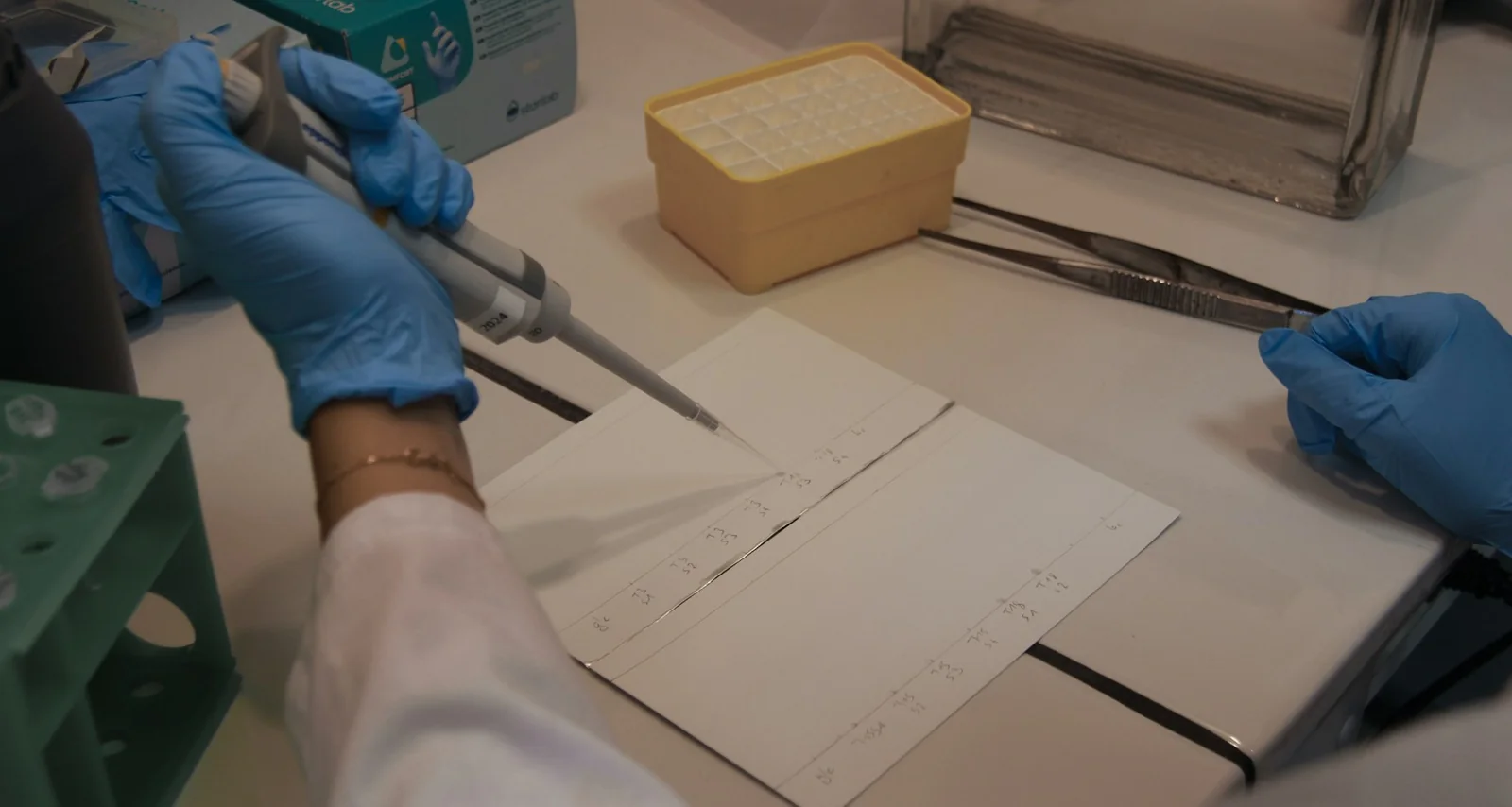
They describe different parts of a laboratory process. Equilibrium dialysis is a separation technique used to isolate the unbound fraction under controlled conditions. Mass spectrometry is an analytical technique that can measure testosterone in a sample, including the fraction obtained after dialysis. A laboratory can use both in the same free testosterone procedure.5
This distinction helps interpret test names. Total testosterone measured by mass spectrometry is still a total result. It does not become a free result because the analytical method is sophisticated. Likewise, calculated free testosterone remains a calculation even when the total testosterone input was measured accurately by mass spectrometry.
The Fiers study specifically combined direct equilibrium dialysis with liquid chromatography-tandem mass spectrometry and compared that measurement with several calculations. Its design illustrates why one must identify both the fraction being assessed and the way it was quantified. The method name alone does not answer both questions.5
For a practical review, ask three separate things: what analyte was reported, how it was measured or calculated, and which reference interval belongs to that procedure. This is particularly useful when an apparent change follows a laboratory switch. Before attributing the difference to a change in hormone production, establish that the two reports are actually comparable. Better measurement terminology can prevent a biological story from being built around a naming misunderstanding.
Does low free testosterone predict who benefits from treatment?
A low free result can strengthen a diagnostic assessment in the right circumstances, but it does not independently establish treatment benefit. In the European Male Ageing Study, low calculated free testosterone with normal total testosterone was associated with more androgen-related signs and symptoms. The analysis was observational; it did not randomize those men to treatment.3
Association helps identify a pattern worth investigating. A treatment decision also requires persistent symptoms, confirmation, investigation of the cause, fertility planning, and evaluation of risks. An asymptomatic person with a borderline estimate presents a different question from someone with clear endocrine disease.
The diagnostic workflow places total and free results within that sequence. The strongest interpretation is one in which symptoms, repeat measurements, a reliable method, and a plausible cause align, rather than one chosen because a single number is below an internet threshold.
Common questions
Is bioavailable testosterone the same as free testosterone?
Can I use the same normal range for every free testosterone test?
Is the free androgen index a free testosterone measurement?
No. It is a ratio based on total testosterone and SHBG, rather than a direct free measurement or a full binding calculation. It is not a reliable substitute for assessing free testosterone in men.4
References
- 1.National Library of Medicine. Testosterone Levels Test. MedlinePlus.
- 2.Bhasin S, et al. Testosterone Therapy in Men With Hypogonadism: An Endocrine Society Clinical Practice Guideline. Journal of Clinical Endocrinology & Metabolism. 2018.
- 3.Antonio L, et al. Low Free Testosterone Is Associated with Hypogonadal Signs and Symptoms in Men with Normal Total Testosterone. Journal of Clinical Endocrinology & Metabolism. 2016.
- 4.Vermeulen A, Verdonck L, Kaufman JM. A Critical Evaluation of Simple Methods for the Estimation of Free Testosterone in Serum. Journal of Clinical Endocrinology & Metabolism. 1999.
- 5.Fiers T, et al. Reassessing Free-Testosterone Calculation by Liquid Chromatography-Tandem Mass Spectrometry Direct Equilibrium Dialysis. Journal of Clinical Endocrinology & Metabolism. 2018.
This article is for general education, not medical advice, diagnosis or a treatment recommendation. A licensed clinician can interpret the evidence in the context of your symptoms, tests, medicines and fertility plans.