

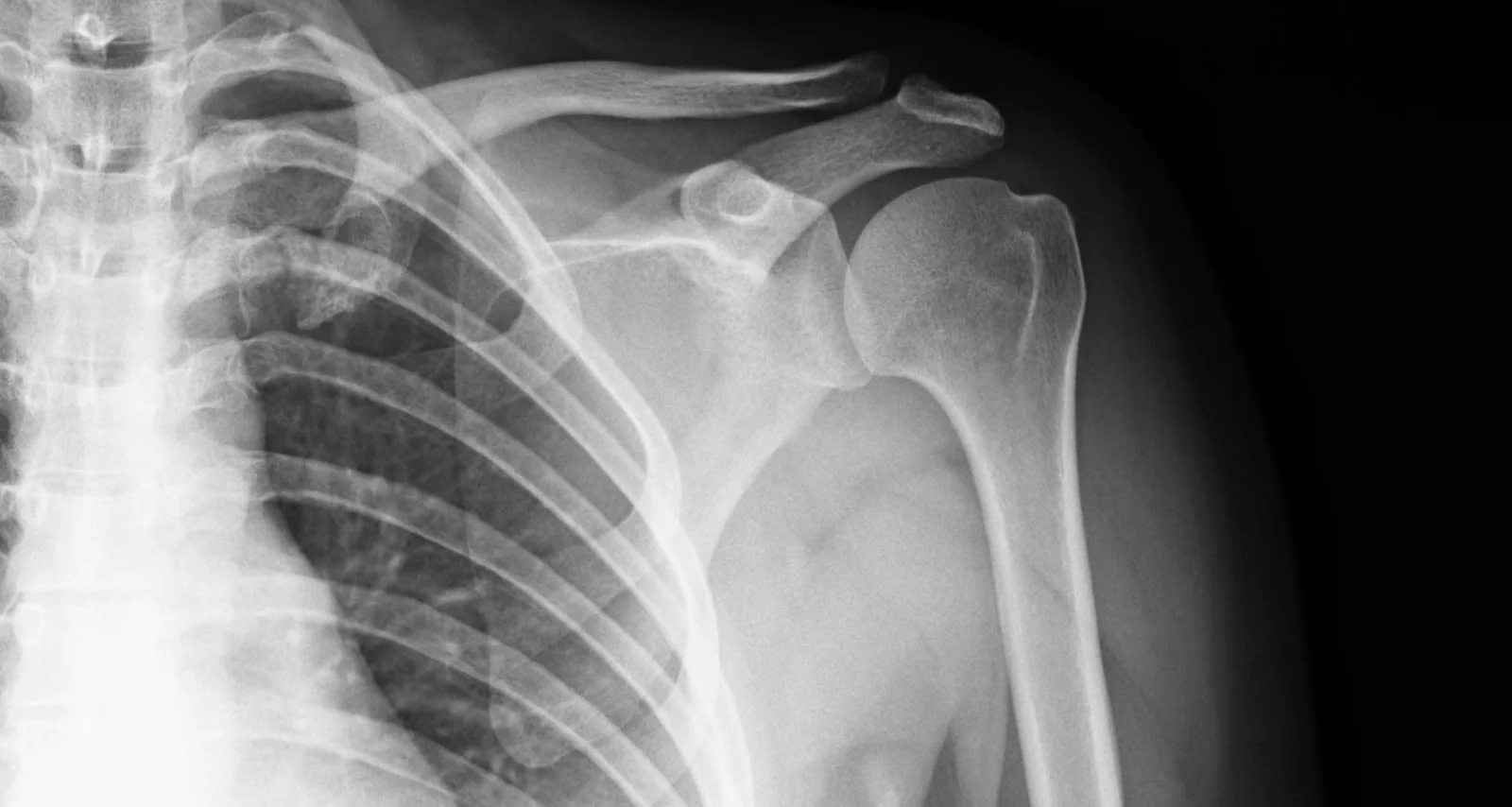
Testosterone can improve bone density in men with low testosterone, but it has not been shown to prevent fractures in the large TRAVERSE population. That trial found clinical fractures in 3.50% of testosterone participants versus 2.46% of placebo participants over a median 3.19 years. Osteoporosis and fracture risk therefore need their own assessment and treatment plan.124
Key points
- A density scan is a surrogate, while a fracture is a clinical outcome.12
- TRAVERSE did not show fracture reduction with testosterone.2
- Treating hypogonadism does not remove the need for osteoporosis care.45
Does stronger-looking bone mean fewer fractures on testosterone?
No. Testosterone can improve bone-density measurements in men with low testosterone, but that does not establish fracture prevention. The distinction became especially clear when the TRAVERSE fracture substudy reported more clinical fractures in the testosterone group than in the placebo group. 12
Bone density is an important risk marker and treatment measure. A fracture is an actual clinical event affected by bone properties, falls, trauma, activity, and other factors. A treatment can improve one part of that system without improving the final outcome.
The evidence therefore supports a precise statement: testosterone has demonstrated effects on bone measurements in selected men with hypogonadism; it has not demonstrated a reduction in clinical fractures in the large TRAVERSE population. Anyone at fracture risk needs a bone-health plan that considers more than testosterone.
What did the Testosterone Trials show about bone density?
The one-year Bone Trial within the Testosterone Trials found that testosterone improved volumetric bone mineral density and estimated bone strength, especially in the spine and trabecular bone. These measurements came from imaging and computational estimates; the study was not large or long enough to determine whether fractures were reduced. 1
Its participants were older men with low testosterone, and most did not have osteoporosis by their baseline T-scores. That limits direct application to a man with severe osteoporosis or to someone with normal testosterone. A result in one bone compartment also should not be described as an equal effect at every skeletal site.
The trial was a sound reason to investigate fracture outcomes. It was not itself proof of fracture protection. The later fracture study asked the additional question that the density study could not answer.
What exactly happened to fractures in TRAVERSE?
The TRAVERSE fracture analysis included 5,204 men aged 45-80 with hypogonadal symptoms, two low morning testosterone results, and cardiovascular disease or elevated cardiovascular risk. After a median 3.19 years of follow-up, clinical fractures occurred in 91 of 2,601 testosterone participants, or 3.50%, and 64 of 2,603 placebo participants, or 2.46%. The hazard ratio was 1.43, with a 95% confidence interval of 1.04-1.97. 2
The observed absolute difference was 1.04 percentage points across that follow-up. This is a straightforward subtraction of the reported proportions, not a personalized risk estimate. The primary fracture definition excluded several sites, including fingers, toes, skull, face, and sternum.
The result did not show fracture protection. It also does not establish a single explanation for the higher event rate. Proposed explanations about behavior or falls remain hypotheses unless directly demonstrated. The density benefit from an earlier study should not be used to dismiss the clinical event finding.
How should bone studies be compared?
The right comparison follows the endpoint from mechanism to patient outcome. A laboratory marker, a scan, a modeled strength estimate, and a fracture count each add information, but they are not substitutes for one another. The table is a guide to that hierarchy, rather than a formula for an individual's risk.
| Evidence level | What it measures | What the testosterone studies showed |
|---|---|---|
| Bone density | Mineral measurements in a defined skeletal compartment | Improved in the one-year Bone Trial. 1 |
| Estimated strength | Computer-modeled resistance derived from imaging | Improved, but not an observed fracture outcome. 1 |
| Clinical fractures | Adjudicated fractures experienced during follow-up | Higher observed incidence in TRAVERSE testosterone participants. 2 |
| Individual fracture risk | History, density, clinical risks and fall context | Requires a separate clinical assessment. 45 |
Why does estradiol matter for men's bones?
Some testosterone is converted to estradiol, and this pathway contributes to skeletal health. A small randomized comparison of testosterone, aromatase inhibition, and placebo in older men found different bone responses despite increases in testosterone with both active approaches. The study supported an important role for aromatization in maintaining bone density. 3
That finding challenges the idea that estradiol is merely an unwanted byproduct to suppress whenever testosterone rises. It does not establish a universal target estradiol concentration, and the small study did not determine fracture risk. Manipulating a laboratory ratio for cosmetic or gym goals could also change biological pathways relevant to bone.
The broader lesson is that a single testosterone number cannot summarize the hormonal environment of the skeleton. Bone assessment should be driven by fracture history, risk factors, and appropriate testing, not by an assumption that higher testosterone alone guarantees protection.
When should low testosterone prompt a bone-health assessment?
A history of a low-trauma fracture, low bone density, height loss, or other osteoporosis risk factors warrants discussion with a clinician. Hypogonadism can be one contributing condition, while medication exposure, smoking, low body weight, and other diseases may also matter. The Endocrine Society's osteoporosis guideline recommends testing higher-risk men and investigating contributing causes. 4
A DXA scan of relevant sites is commonly used to assess bone density. The result is interpreted with clinical risk, including prior fractures, rather than in isolation. NIAMS also emphasizes the history, examination, and medication review. 5
Our article on causes of low testosterone explains why the underlying endocrine diagnosis matters. A person with a hormone disorder and a person with osteoporosis may need overlapping investigations, but the conditions do not become the same diagnosis.

Can TRT replace an osteoporosis medicine?
Testosterone should not be assumed to provide the fracture protection expected from an osteoporosis treatment plan. Men with sufficiently high fracture risk may need a medicine selected specifically for osteoporosis, even if a hormone deficiency is also treated. The older male-osteoporosis guideline and the newer fracture result need to be read together: the 2012 guideline predates TRAVERSE. 24
The decision depends on prior fractures, bone density, overall risk, other conditions, and treatment suitability. Nutrition, appropriate physical activity, and fall prevention remain part of care. 5 These measures have different roles and should not be presented as interchangeable replacements for medication in someone who needs it.
The muscle and function evidence adds another useful limit: more lean mass does not automatically establish fewer falls. A chain of plausible benefits still needs confirmation at its final clinical endpoint.
What should be monitored when both hypogonadism and osteoporosis exist?
Follow both plans explicitly. Hormone follow-up asks whether relevant symptoms and laboratory exposure are appropriate and whether adverse effects have appeared. Bone follow-up asks about new fractures, falls, adherence to any osteoporosis treatment, and changes in density when repeat scanning is indicated. A normal testosterone result cannot answer all of those questions.
If a fracture occurs during treatment, it should prompt reassessment rather than the assumption that the hormone dose is inadequate. The fracture circumstances, skeletal site, and underlying risk are relevant. Abrupt pain after an injury or inability to bear weight needs timely clinical evaluation.
Once direct fracture evidence exists, a favorable density result cannot be treated as proof of fracture protection. The article on testosterone monitoring covers the separate safety tests required during treatment; those tests do not replace fracture-risk management.
Common questions
Does the fracture finding mean testosterone always weakens bones?
Can I use the 1.04 percentage-point difference as my personal risk?
References
- 1.Snyder et al. Effect of Testosterone Treatment on Volumetric Bone Density and Strength in Older Men With Low Testosterone: A Controlled Clinical Trial. JAMA Internal Medicine. 2017.
- 2.Snyder et al. Testosterone Treatment and Fractures in Men with Hypogonadism. NEJM. 2024.
- 3.Dias et al. Effects of aromatase inhibition vs. testosterone in older men with low testosterone: randomized-controlled trial. Andrology. 2016.
- 4.Watts et al. Osteoporosis in Men: An Endocrine Society Clinical Practice Guideline. JCEM. 2012.
- 5.NIAMS. Osteoporosis: Diagnosis, Treatment, and Steps to Take.
This article is for general education, not medical advice, diagnosis or a treatment recommendation. A licensed clinician can interpret the evidence in the context of your symptoms, tests, medicines and fertility plans.