


High testosterone means a result exceeds the appropriate laboratory range or treatment-monitoring target. It does not identify the cause. Clinicians check units, method, treatment timing, SHBG and free testosterone when relevant, and possible sample contamination. Persistent unexplained elevations may require endocrine evaluation. Acne, body hair, or muscularity alone cannot diagnose high testosterone.123
Key points
- High total testosterone does not always mean high free testosterone.23
- Topical gel near a blood-draw site can produce a falsely high result.4
- Evidence about prescribed replacement cannot establish the safety of supraphysiological androgen use.56
What counts as high testosterone?
The answer depends on the analyte, laboratory method, reference interval, and whether the person is taking hormone therapy. Total and free testosterone have different units and intervals. A value above one laboratory's upper boundary should not be interpreted using an unrelated online range.1 2
For a person receiving testosterone, the clinically relevant target and collection time may differ from the reference interval printed on the report. An injection-related peak, a trough, and a product-specific monitoring sample answer different questions. The last administration time needs to accompany the result.
There is no universal high-testosterone symptom checklist that can replace laboratory evaluation. Muscle size, body hair, confidence, and sex drive vary for many reasons. The starting point is a verified result with the necessary context, not an inference from appearance or personality.
Can high SHBG make total testosterone look high?
Yes. Higher SHBG can raise the amount of testosterone held in the bound pool, producing a higher total concentration without the same increase in the free fraction. The endocrine system's response also matters, so the relationship is not captured by subtracting SHBG from the total number.2 3
Thyroid conditions, liver disease, some medicines, and other factors can change SHBG. A clinician may therefore assess free testosterone through an appropriate method and investigate the binding-protein change when the pattern warrants it. The SHBG guide explains that process.
An elevated SHBG result is not proof of one particular disease, and lowering the binding protein is not automatically a treatment goal. The question is whether there is true androgen excess, a separate underlying condition, or a measurement pattern that needs no hormone-directed intervention.
How can a testosterone result be falsely elevated?
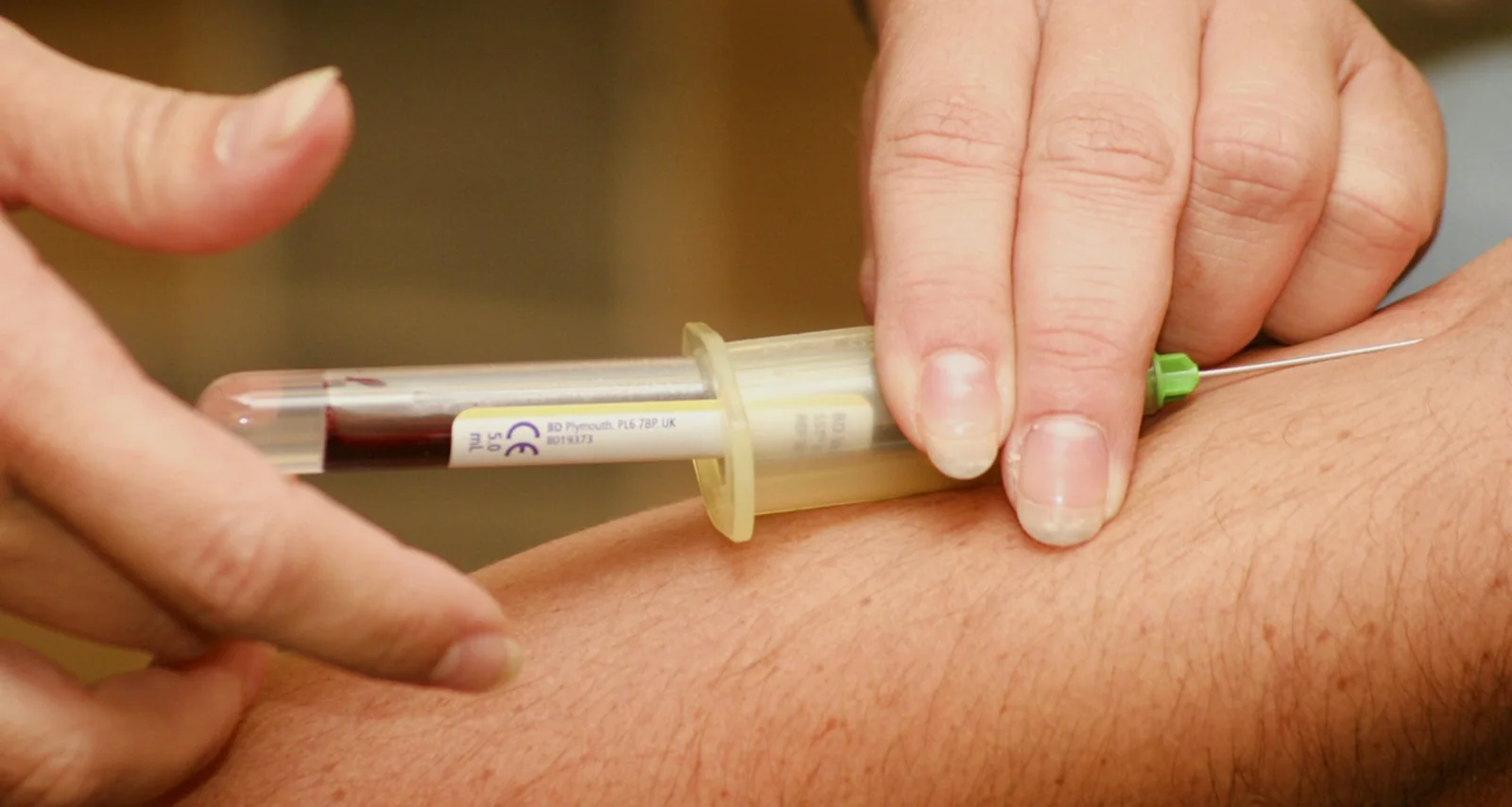
A sample can be contaminated by topical testosterone gel applied near the collection site. In a retrospective clinical review, investigators identified seven cases in which contamination strongly explained unexpectedly high concentrations. This establishes a real possible artifact, but it does not tell us the population prevalence or justify dismissing every high result as contamination.4
The practical response is to tell the clinician and phlebotomy team about topical hormone use and follow a collection plan that avoids contamination. An unexpected value may also prompt the laboratory to assess method interference or confirm the result with another suitable approach.
Do not make a large treatment change from an unexplained value without reviewing collection. The blood test guide covers the distinction between ordinary diagnostic sampling and medication monitoring. A technically flawed specimen cannot be fixed through clinical interpretation alone.
How do testosterone medicines and anabolic androgens affect the result?
Prescribed testosterone and nonprescribed androgens can raise circulating androgen exposure and suppress natural LH and FSH signaling. The exact measured testosterone depends on the substance, formulation, dose timing, and assay. A standard testosterone test does not quantify every anabolic compound or the total physiological burden of a mixed exposure.2 5
This makes an honest exposure history essential. A normal measured testosterone during use of another androgen does not establish normal reproductive signaling or safety. Similarly, low testosterone after stopping outside androgens can reflect suppression rather than the baseline state before use.
The HAARLEM prospective study followed men using androgens and found that recovery of blood testosterone and sperm production differed. Those findings describe a selected observational cohort; they cannot identify a safe exposure or provide a reliable personal recovery deadline.5
Which medical causes deserve investigation?
When an elevation is persistent, technically credible, and unexplained by treatment or binding proteins, clinicians consider less common endocrine causes. Testicular hormone-producing tumors and adrenal disorders are among the possibilities described in NIH testing information. The relevant possibilities depend on the entire hormone pattern and examination.1
A new testicular lump or rapid unexplained physical change deserves medical assessment even before its relationship to testosterone is established. Conversely, a mildly elevated total result with reassuring context should not be used to announce a tumor without supporting evidence.
LH and other selected hormones can help direct the workup. Imaging and specialist tests should follow a plausible clinical question rather than being ordered solely because a report contains a high flag. The goal is to verify the finding, then locate its source when necessary.

How should different high-result patterns be approached?
This table organizes verification steps. A high result needs a verified explanation before it can guide treatment changes.1 2 3 4
| Pattern or context | Possible explanation | What helps distinguish it |
|---|---|---|
| High total with non-elevated free | Higher SHBG or method differences | Reliable free method and binding-protein assessment |
| Unexpectedly extreme result in a gel user | Collection-site contamination | Application history and appropriately repeated sample |
| High value shortly after treatment administration | Formulation-related exposure or monitoring mismatch | Exact product and administration-to-draw timing |
| Persistent unexplained elevation without known exposure | Endogenous endocrine cause or analytical interference | Confirmation, related hormones, examination, selected specialist workup |
Which health effects can accompany excessive androgen exposure?
Acne, erythrocytosis, blood-pressure changes, and impaired sperm production can occur with testosterone exposure, while risks depend on the level, duration, formulation, other substances, and individual susceptibility. None of those findings can be reliably excluded by feeling well or by one apparently acceptable testosterone measurement.2 6
FDA's 2025 labeling action added or updated blood-pressure warnings across testosterone products. That evidence relates to medicinal products and studied use; it is not an upper-limit safety study for anabolic regimens. Cardiovascular findings from replacement trials cannot be extrapolated to much higher or mixed androgen exposures.6
The hematocrit monitoring article explains one measurable effect. A high concentration is therefore a reason to check both the measurement and the clinical consequences, rather than assuming a better performance outcome or diagnosing harm from the number alone.
Does being outside the reference interval automatically mean toxicity?
No. A reference boundary describes a distribution from a selected population and method. It is not a universal toxicity threshold. A modest result above that boundary can have a different meaning from persistent marked elevation during outside androgen exposure, especially when SHBG and free testosterone differ.1 2 3
The reverse is also important: a value within the printed interval cannot guarantee that a treatment or mixed exposure is free of adverse effects. Blood pressure, hematocrit, symptoms, fertility, and the actual substances used may reveal consequences that the single testosterone concentration does not capture.2 5 6
This is why the review needs two parallel questions. Is the result technically credible and interpreted with the correct interval or monitoring target? Is there evidence of an exposure or medical condition that requires attention? The first question prevents an artifact from becoming a diagnosis. The second prevents a reassuring-looking number from ending a necessary assessment.
The available evidence does not establish one concentration below which every form of androgen use is safe. A laboratory flag should initiate proportionate evaluation, not function as either an alarm threshold for certain harm or a permission threshold for continued exposure.
What should you bring to an appointment about a high result?
Bring the full report with units and reference interval, collection time, prior results, all medicines and supplements, and the timing of any hormone administration. For gel, include the application site and whether it was near the blood-draw area. These details can distinguish a dosing question from a specimen question.2 4
Also describe recent symptoms and changes, including acne, headaches, swelling, blood-pressure readings, or fertility concerns. The clinician can decide whether repeat testing, free testosterone, SHBG, blood count, or a more specific endocrine evaluation is appropriate.
Do not try to lower the result with unprescribed blockers, blood donation, or an abrupt self-directed regimen change. Those actions can obscure the underlying pattern or create new problems. A verified cause makes the next decision more precise.
A useful follow-up plan should specify what will be repeated, under which collection conditions, and which clinical findings need monitoring while the source of the elevation is being clarified.
Common questions
Does a high sex drive prove that testosterone is high?
Can naturally high testosterone be normal for an individual?
Should a very high gel-monitoring result automatically lead to a lower dose?
The prescriber should review timing and contamination first. Gel at the collection site can produce a misleading value, so an appropriately repeated sample may be needed before changing treatment.4
References
- 1.National Library of Medicine. Testosterone Levels Test. MedlinePlus.
- 2.Bhasin S, et al. Testosterone Therapy in Men With Hypogonadism: An Endocrine Society Clinical Practice Guideline. Journal of Clinical Endocrinology & Metabolism. 2018.
- 3.National Library of Medicine. SHBG Blood Test. MedlinePlus.
- 4.Pinedo Pichilingue A, Greene DN, Krasowski MD. Falsely Elevated Serum Testosterone Measurements Resulting From Testosterone Topical Gel Contamination of the Venipuncture Site: Case Series and Retrospective Review. Heliyon. 2023.
- 5.Smit DL, et al. Disruption and Recovery of Testicular Function During and After Androgen Abuse: The HAARLEM Study. Human Reproduction. 2021.
- 6.US Food and Drug Administration. FDA Issues Class-Wide Labeling Changes for Testosterone Products. February 28, 2025.
This article is for general education, not medical advice, diagnosis or a treatment recommendation. A licensed clinician can interpret the evidence in the context of your symptoms, tests, medicines and fertility plans.